

Once you have poured your own tin at Nousaku, go on to the place where casting in Takaoka began. For people here, metal casting is not something confined to a factory. It is written into the streets and into the festivals.
Seven casters
The town of Takaoka was founded in 1609. Two years later, in 1611, Maeda Toshinaga, second lord of the Kaga domain, invited seven casters from Nishibe-Kanaya in the Tonami district and had them set up foundries in one corner of the new town. That corner is Kanayamachi, and today’s Takaoka copperware grew from it.
Kanayamachi is the only foundry quarter in Japan to be designated a Preservation District for Groups of Traditional Buildings (in 2012). The houses wear fine lattices known locally as samanoko, and the stone paving is set with pieces of copper: even underfoot, you can read the town’s trade.
June: Goin-sai
Each year on 19 and 20 June, Kanayamachi holds its Goin-sai festival. On the first evening, people dance down the stone-paved street to Yasakabushi, a work song of the foundries, in a procession called machi-nagashi. Song drifts between the lattice fronts on a summer night.
May: the Mikurumayama festival
On 1 May, central Takaoka holds the Takaoka Mikurumayama festival. It is said to begin with an imperial carriage that Toyotomi Hideyoshi used to receive the emperor, later given to the townspeople by Maeda Toshinaga. Seven floats, the mikurumayama, process through the streets.
Their wheels, railings and beams carry the metalwork, lacquer and dyeing of Takaoka’s craftsmen. The floats are designated both an Important Tangible and an Important Intangible Folk Cultural Property of Japan, and the festival is part of UNESCO’s Intangible Cultural Heritage inscription “Yama, Hoko, Yatai, float festivals in Japan”. On other days, you can see the floats themselves at the Takaoka Mikurumayama Kaikan.
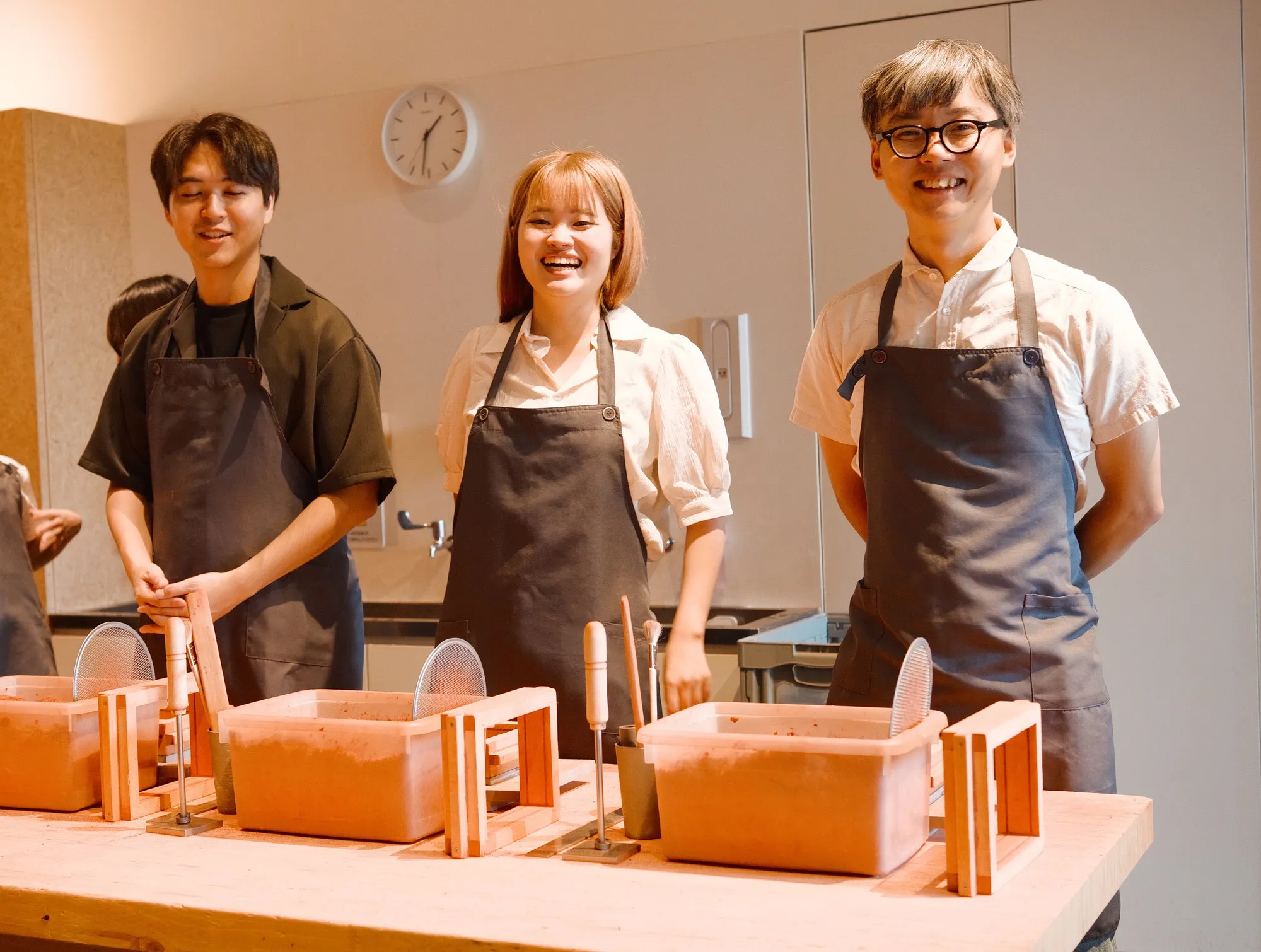
Using your tin cup at home
Try the sake cup you cast with a Toyama sake. Tin conducts heat well, so chill the cup in the refrigerator before pouring and cold sake will stay cold for longer; the soft feel at the lip is part of tin’s charm.
Tin is a soft metal, so wash it with a soft sponge. With use, its shine settles into something quieter, and together with the letters you stamped on the day, it becomes a cup that is yours alone.
Published


